
Empowering Tikanga in Post-Sentence Restorative Justice
This presentation by Lance Ryan of Ngāti Maniapoto, a lecturer at Auckland University of Technology, explores how Māori-led restorative justice organisations honour tikanga while meeting Crown administrative demands under Te Tiriti o Waitangi. Ryan describes a "cultural double shift," in which frontline staff practise relational, community-based healing even as their organisations face pressure to conform to government funding structures. The study draws on interviews, document analysis, wānanga and autoethnography, overseen by a dedicated Māori research governance group, to examine how Crown systems shape an organisation's capacity to maintain cultural integrity.
Code and colonialism: how risk algorithms keep failing Māori
Two risk-scoring tools have shaped sentencing and parole decisions for over 25 years. Their designers promised neutrality. The data tells a different story.
Summary of research by Emily Silby
Māori make up around 17% of New Zealand's population. They represent more than half of its prison population. That gap has persisted for decades — and, this article argues, has been quietly entrenched by algorithmic tools that were supposed to make the justice system fairer.
Since 1999, two tools have been at the centre of criminal justice decision-making in New Zealand: RoC*RoI (Risk of Reconviction × Risk of Reimprisonment) and YORST (Youth Offending Risk Screening Tool). Both were introduced with good intentions. Both have been repeatedly shown to produce outcomes that disadvantage Māori — and both remain in use.
THE TOOLS
RoC*RoI was built from the criminal histories of 133,000 individuals dating back to 1983. Race was an explicit predictor variable from the start. The model scores individuals between 0 and 1 — anything above 0.7 is "very high risk" — and those scores feed into pre-sentence reports, sentence planning, parole board decisions, and programme eligibility.
The problem is structural. The model runs on static data: things that cannot change, like age at first conviction, or that only move in one direction, like the number of previous convictions. If the historical data encodes decades of over-policing in Māori communities, the algorithm doesn't correct for that — it learns from it and reproduces it.
Higher scores lead to harsher sentences, longer criminal records, and even higher scores at the next point of contact. The Department of Corrections' own 2009 report acknowledged this could have "potentially pernicious amplifying effects on certain sub-populations of offenders (such as Māori)."
YORST was introduced in 2007 for youth, and applies to children from age 10. Because juvenile criminal records are thin, it drew on proxies: the decile of a child's primary school, their peer group, substance use, family history. These are not behaviours — they are circumstances. A child cannot choose the school their neighbourhood can afford.
WHAT THE WAITANGI TRIBUNAL FOUND
In 2002, Department of Corrections probation officer Tom Hemopo brought an urgent claim to the Waitangi Tribunal, arguing both tools discriminated against Māori. The Department acknowledged that two people with identical criminal histories would receive different scores depending on their ethnicity. Their response was to zero-rate the ethnicity variable. Hemopo then re-ran assessments with the revised tool — and found Māori offenders still received higher scores.
An internal email produced during the hearing showed that staff had been looking for a variable that was "highly correlated with ethnicity" without changing the model's stated accuracy. In other words: a proxy.
“If police institutional bias against Māori has contributed to higher prosecution and conviction rates for Māori, the data set will simply reflect the consequences of such bias without highlighting, let alone correcting, its distorted effect.”
The claim was ultimately unsuccessful — ethnicity had been formally zero-rated, and Māori offending rates had slightly declined at the time. But Hemopo returned to the Tribunal in 2015, thirteen years later, with the same concern. By then, 80.9% of sentenced Māori prisoners were being reconvicted within five years.
BY THE NUMBERS
-
Māori share of New Zealand's general population (2018 census)
-
Māori share of the prison population
-
Sentenced Māori prisoners reconvicted within five years
-
Same figure for non-Māori
THE DEEPER ARGUMENT
Silby's article traces the problem back further than the algorithms themselves. The data these tools were trained on reflects a legal history that criminalised Māori culture outright — from the 1863 acts that allowed the Crown to seize land from anyone defending it, to the 1907 Tohunga Suppression Act that made traditional healing practices illegal. The criminal justice system was built on that foundation. The algorithms learned from it.
“An algorithm will take that historic data and locate a pattern, necessarily continuing that bias. This is what ‘success’ looks like for a programme and nothing more.”
The article also raises the question of data sovereignty — the right of Māori to govern how data about their communities is collected and used. Te Mana Raraunga, the Māori Data Sovereignty Network (founded 2018), now provides some oversight, but the tools that feed on that data predate it by nearly two decades.
The 2019 NZ Law Foundation report on government AI reached similar conclusions: YORST's variables function as proxies for ethnicity, and zero-rating race in RoC*RoI does not make the tool free of discriminatory effect. It recommended independent oversight and meaningful consultation — neither of which had occurred when the tools were first introduced.
WHERE THINGS STAND
The government's responses since have been real but indirect: a redesigned Tauranga courthouse built in consultation with iwi, a new Criminal Cases Review Commission, restored legal aid funding. In 2018, the Department of Corrections' RoC*RoI was listed in the Algorithm Assessment Report as its sole operational decision-making algorithm — a formal acknowledgement, at least, that it exists.
New Zealand has also signed an Algorithm Charter committing signatories to transparency and consultation. The Department of Corrections is a signatory. The tools remain in use.
“If RoC*RoI and YORST are more ‘successful’ for New Zealand European than Māori, then perhaps utilise these tools just for New Zealand European offenders.”
That provocation sits at the heart of the article. Not as a serious policy proposal, but as a way of making the logic plain: if a tool performs differently across ethnic groups, then its results are not neutral. Calling them neutral doesn't make them so.
Justice as Trauma Summit
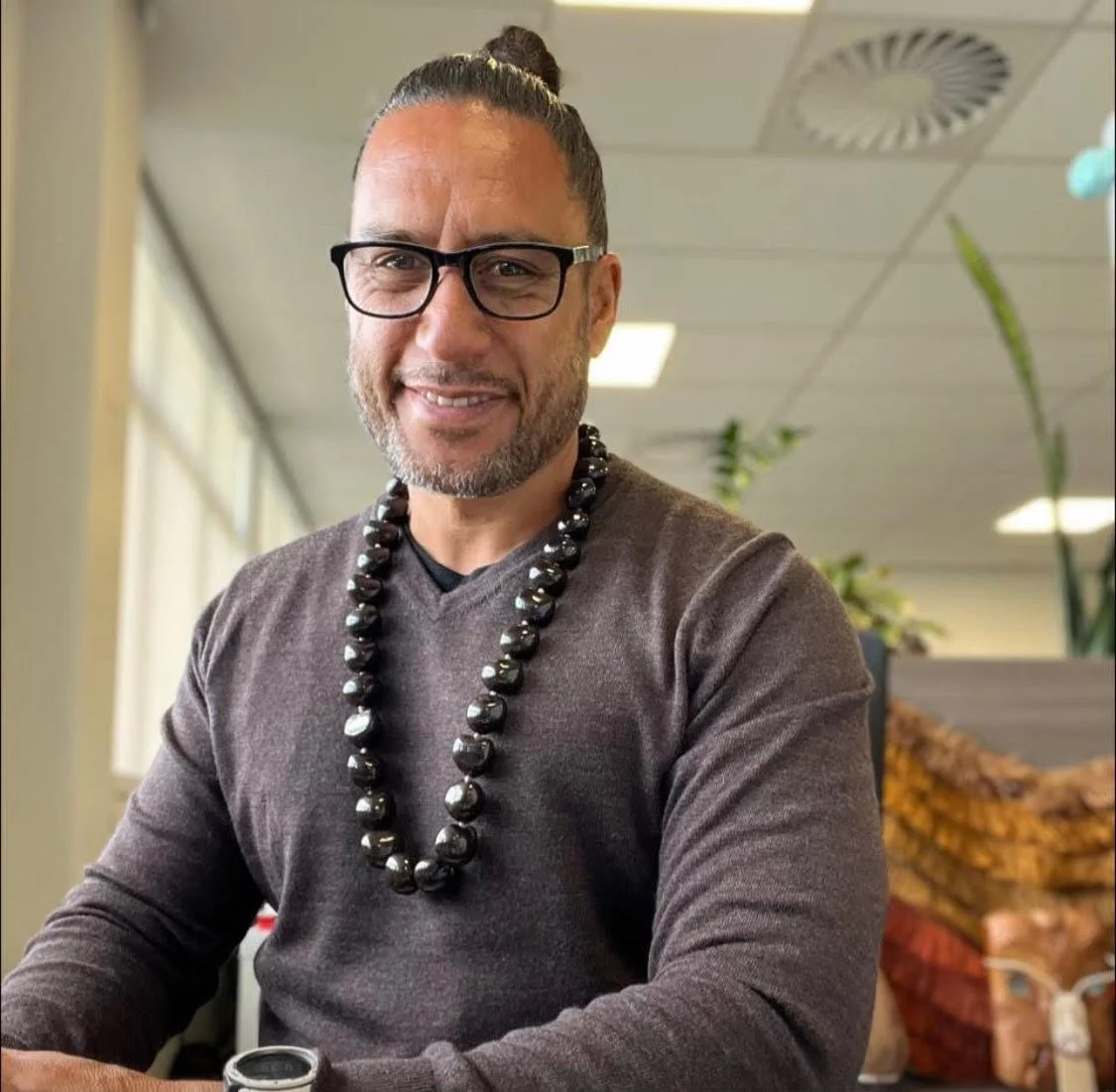
Tere Davis presented
Hei Tatou Pounamu at the Justice as Trauma Summit April 6 in Vancouver BC.
I whakaatu a Tere Davis i te kaupapa Hei Tātou Pounamu ki te Justice as Trauma Summit i te 6 o Aperira ki Vancouver BC.
The tikanga-based post sentence process for tangata hara and tangata mamae has been recognised as offering hope and transformation to those tangata post sentence who can be supported as they re-enter the community after incarceration.
Helen Bowen also talked about AUT's summer school for law students where a trauma-informed practice elective helps students identify their own and other’s trauma in their work as lawyers.
Read more about the summit here or view the presentation below.

Team Hui at Bodega
An amazing gathering of facilitators, staff, Chair and trustees occurred at Bodega on 30 July 2025. We were sad not to have our new trainee facilitator Hetekia Te Amo (Tapuika) to share in the korero and missed Rosie Abbott, Esma Brown, Fia Turner and Raewyn Bhana who were unwell. I hope Raewyn's dog is on the mend. Nevertheless, we experienced an amazing coming together of talent and discovery of each other's purakau.
Natalie (Aiga) shared her wealth of experience as victim advocate/ facilitator with Project Restore - we are so grateful to have you on board Natalie.
Kainee has a depth of experience as a facilitator with MUMA and as a case manager within the AODTC. We are excited to have her join our team.
Jo is our new Operations Co-ordinator and brings solid systems experience and a real interest in tangata mamae and tangata hara from her past roles. Their loss is our gain.
Katherine as GM, brings solid accountancy expertise, fund raising and operations knowledge to a passion for the restorative process.
Shelley (Ngati Rahiri Tumutumu) shared her journey and brings passion and a lived experience to the team. She will also join the trainee team and will bring huge levels of tikanga expertise from her cultural report writing.
Helen shared the trustee journey of Hei Tatau Pounamu with Tere and Robyn (previous trustee) - the idea germinated for a while and came to fruition post COVID when we received a referral from the NZ Parole Board. We are so happy to see the development in the last few years where we now have systems in place and research expertise from AUT
Robyn (Tainui) shared her journey with the Trust and brings solid tikanga experience as a pre- sentence facilitator and with working with KMOT. She is a solid asset to our team. We are fortunate to have her as a facilitator of such seniority.
Tere (Ngāpuhi, Ngâti Hine, Ngâti Manu) as the Chairperson brings huge tikanga knowledge and experience to the role. He is an active skilled facilitator and our Trust is enhanced by having him lead us into the next stage.
We are so grateful to have Rosie Abbott (Nati Kahungunu) with her tikanga/restorative practice experience, our new trustee Esma Brown (NgătiHine, NgătiManiapoto) who brings huge skill and leadership to our team.
We also welcomed the talented Hetekia Te Amo - the Pou Oranga from AODTC, Raewyn Bhana (Ngâpuhi, Indian) who runs Te Pae Oranga and Fia Turner an amazing Pasifika restorative facilitator to our team.
He aha te mea nui o te ao? He tangata, he tangata, he tangata.